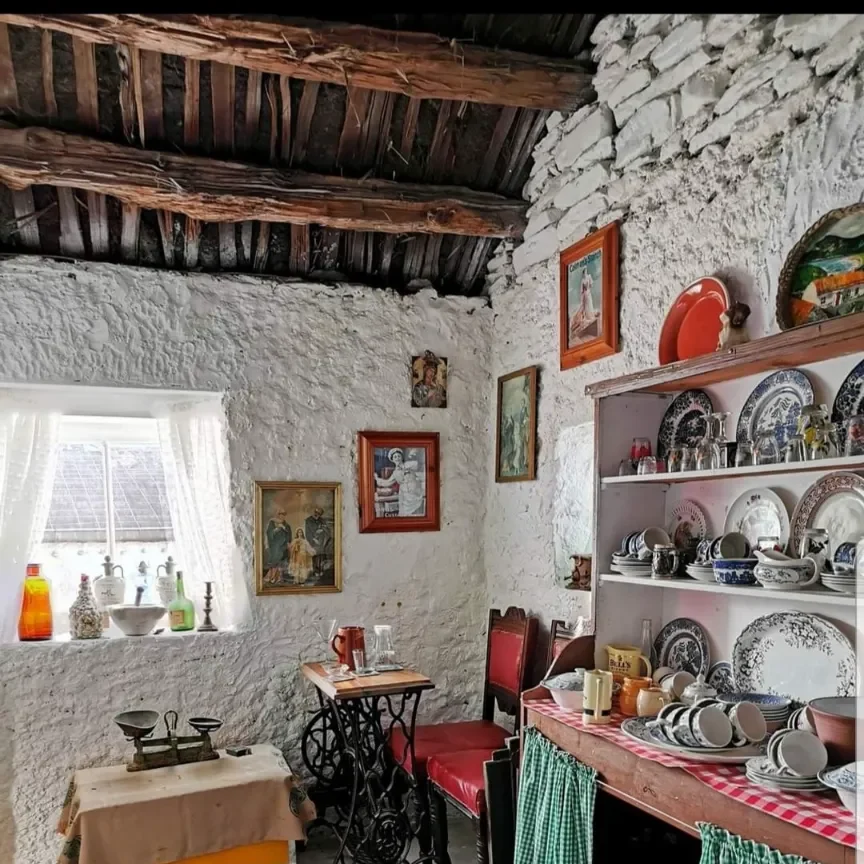
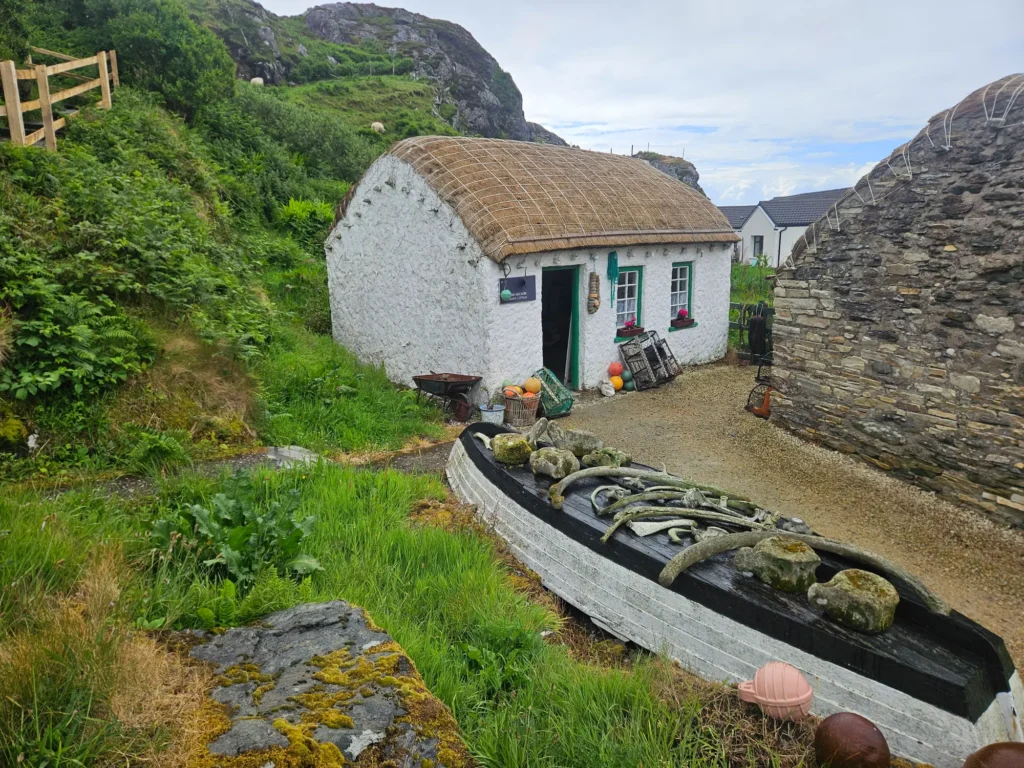
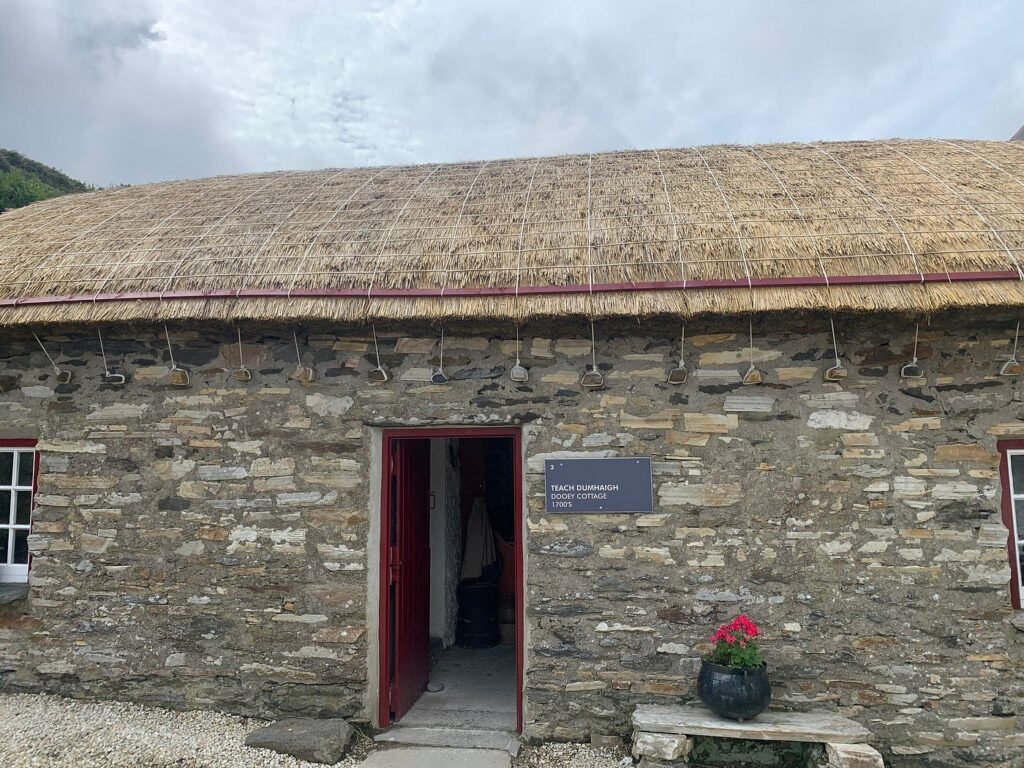
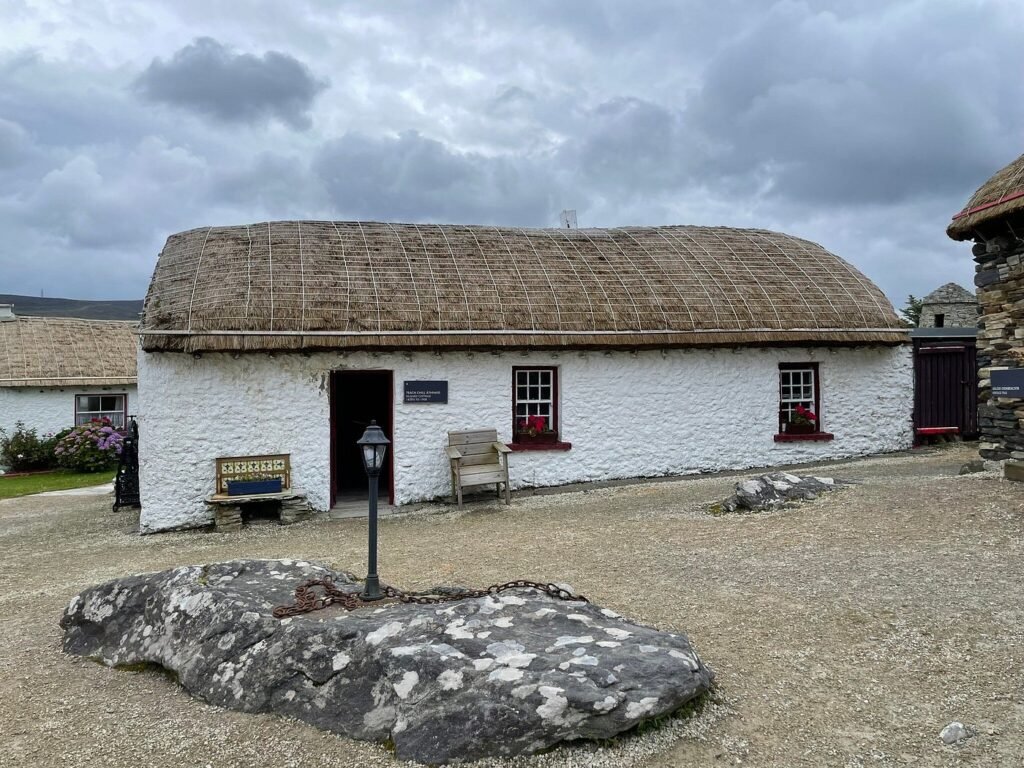
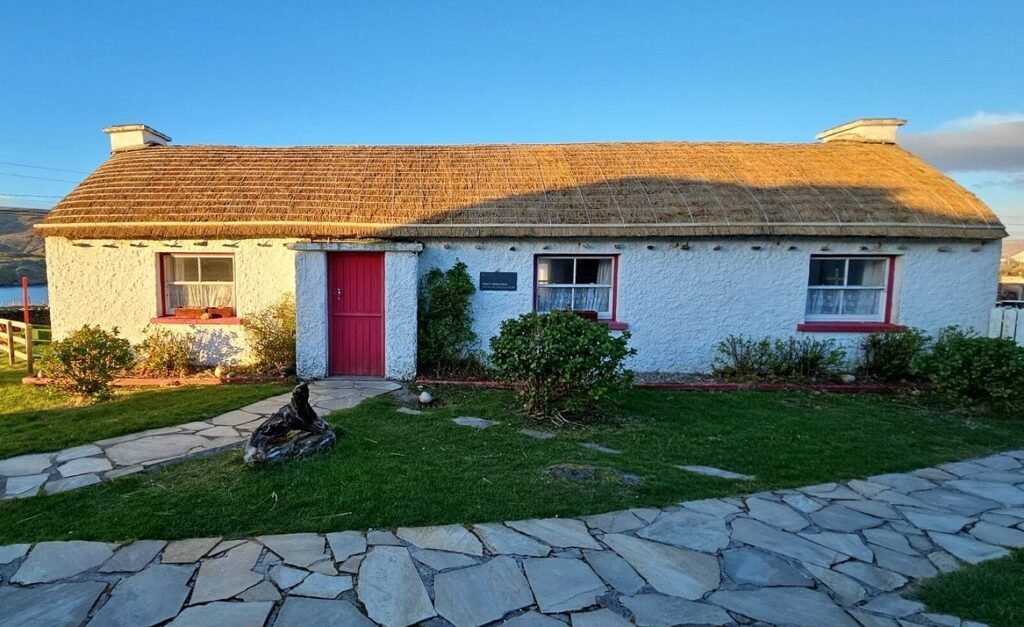
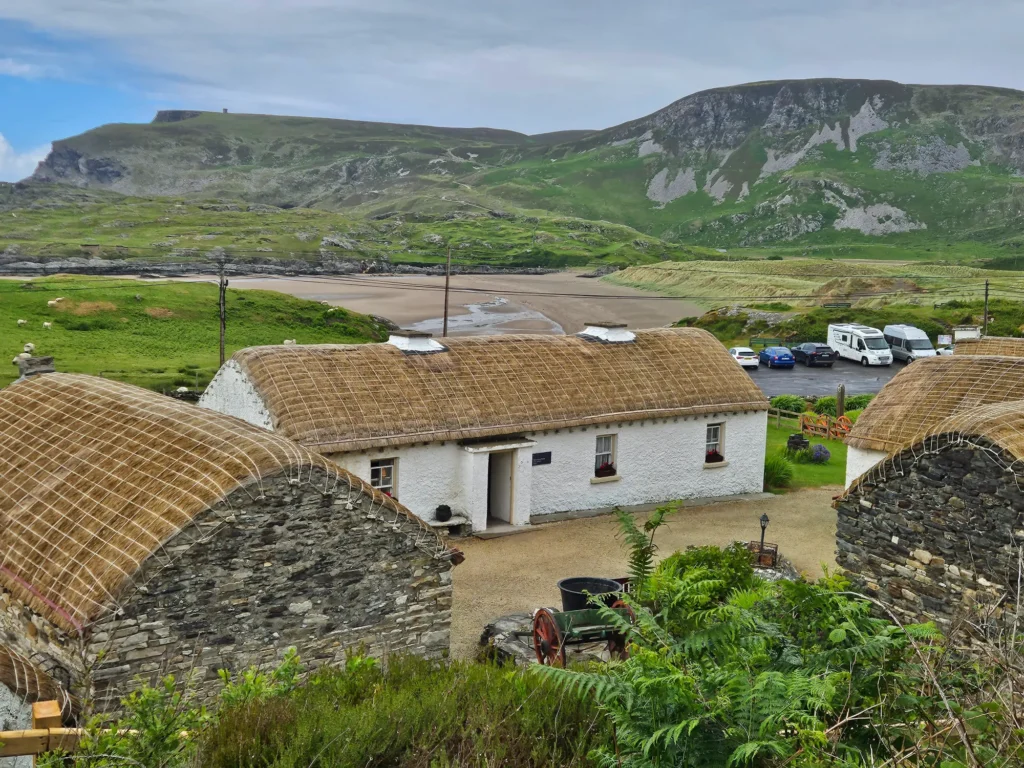
A clachan is historically a group of small single-story cottages, usually belonging to farming or fishing people and sited on poor land. Each cottage in the Folk Village ‘clachan’ recreates a different era of Irish history. Cottages are neatly white-washed, with a traditional half-door design to keep the animals out and the people in. Roofs are thatched in the distinctive rounded Donegal style, tied down securely with rope and pegs to protect the thatching from the fierce westerly winds off the ocean.
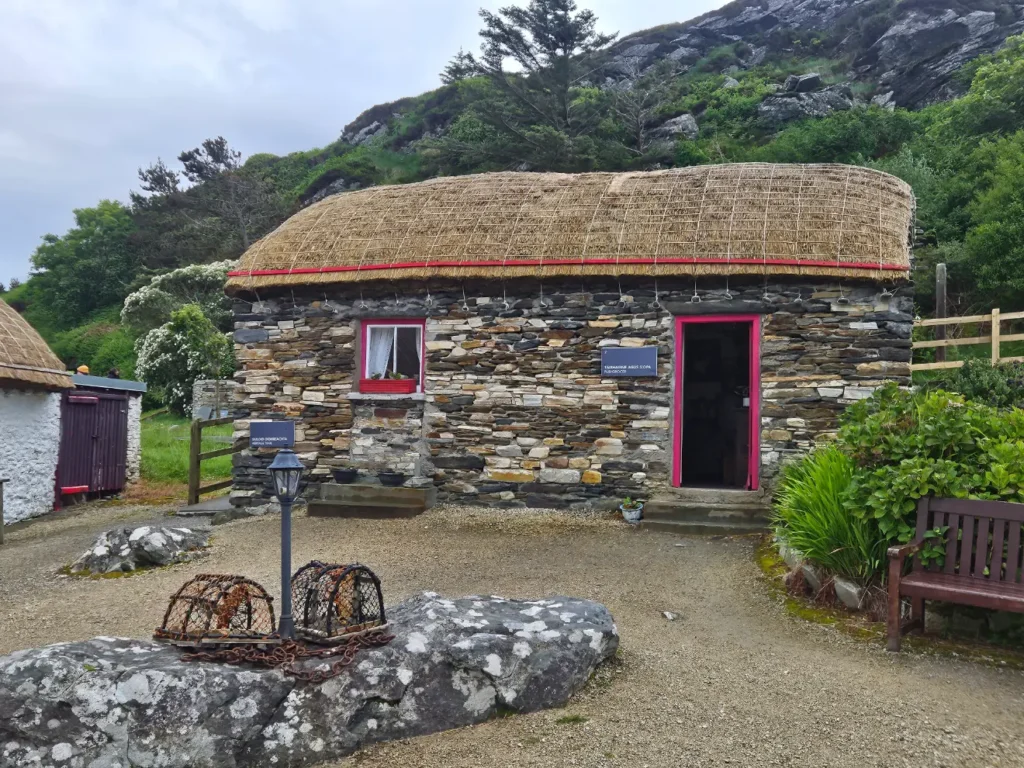
The Fisherman’s cottage is an exhibition house opened in 2011 together with the Pub-Grocer. The Fisherman’s cottage depicts the local fishermen’s living conditions and is similar to the type of one-roomed cottage lived in by artist Rockwell Kent and poet Dylan Thomas when they visited the area in the early 20th century. Some artwork associated with their visit to Glencolmcille is on display in the School house and Tea Rooms.
B’as cúlraí feirmeoireachta agus iascaireachta iad cuid mhór de mhuintir Ghleann Cholm Cille. Ba mhinic a ndeachaigh an dá shlí bheatha le chéile, agus chuaigh go leor feirmeoirí amach ar an fharraige san earrach agus sa samhradh, ag iascaireacht bradán agus gliomach. Rinneadh na potaí gliomach i rith an gheimhridh, sa bhóitheach (cró bó) go hiondúil, agus dheisigh siad a líontáin anseo, fosta.
1700s Dooey Cottage
TeacH na hIASCAIRÍ
This is a typical tenant farmer’s cottage of the time. The floor was made from clay/mud and the walls were plastered with the same substance. Rushes were strewn across the floor as a covering. The roof is made in three layers; a layer of bog timber, which was preserved under the bogs; a layer of scraw, which is the top layer of the bog and then the straw on the outside.
Is gnáth-theach é seo d’fheirmeoir tionóntach na linne sin. Is as cré/ láib a bhí an t-urlár déanta as agus bhí na ballaí plástráilte as na hábhair chéanna. Bhí luachair scaipthe trasna an urláir mar chlúdach. Tá an díon déanta as trí bhrait; brat amháin d’adhmad portaigh a caomhnaíodh faoin phortach; brat cocháin mar bharr an phortaigh, agus an cochán eile a bhíonn lasmuigh.
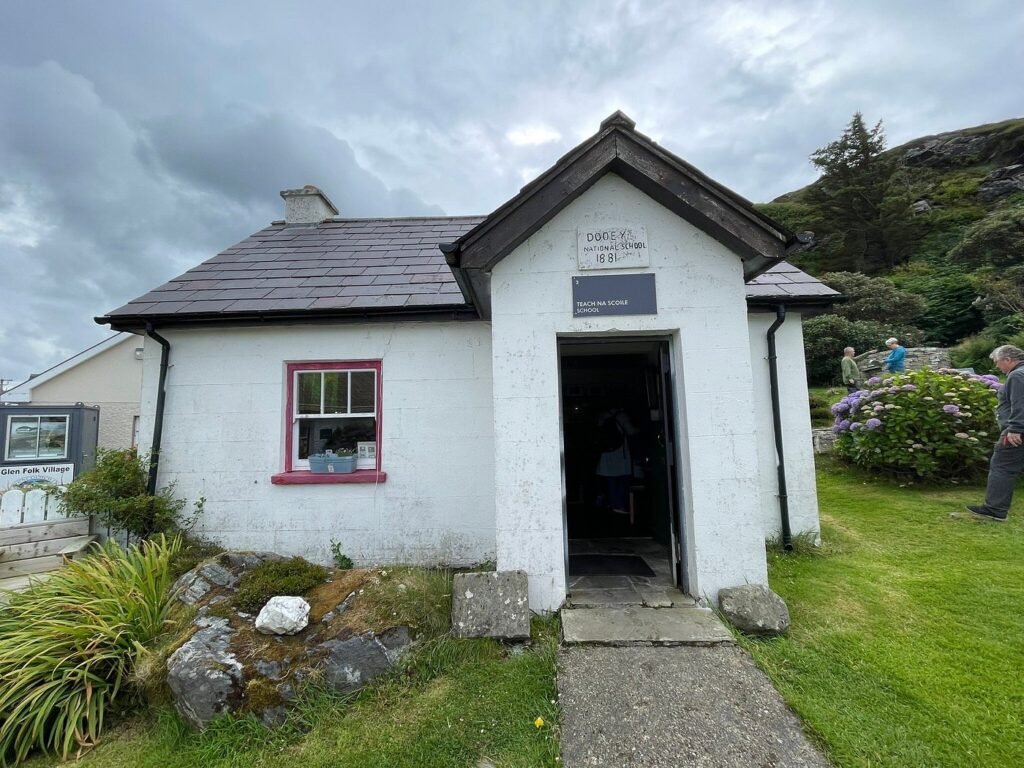
1850s School House
TeacH na scoile
The school house represents a 19th century school. The fireplace was the only method of heating during this era, the children were expected to bring turf with them to keep the fire lit. This practice continued into the mid 1900’s.
Is ionann an teach scoile agus scoil ón 19ú haois.Ba é an teallach an t-aon mhodh teasa a bhí ann i rith na tréimhse seoagus bhí ar pháistí móin a thabhairt leo chun na scoile leis an tine a choinneáil lasta. Lean an nós seo ar aghaidh go dtí lár na 1900idí.
1850 - 1900 Killaned Cottage
TeacH na hIASCAIRÍ
There was much emigration during this period from Ireland as a result of the famine. Markets were beginning to develop and people were slightly better off; some people were now sending home money from America. This is why they could afford to make some improvements such as glass in the windows.
Bhí a lán daoine ar imirce as Éirinn de bharr an Ghorta le linn na tréimhse seo. Bhí margaí á bhforbairt agus bhí daoine níos fearr as; bhí roinnt acu ag cur airgid na bhaile as Meiriceá. Bhítí ábalta feabhsaithe ar nós fuinneoga le gloine a dhéanamh ar na tithe.
1900's Cottage
Teach An Athair McDaidhir
1900's Cottage
TeacH na hIASCAIRÍ
This cottage is much bigger; three rooms, bedroom, kitchen and a parlour. The floors are now made of concrete and the walls are straighter and smoother. Milled timber was used for the roof instead of bog oak which was used in the houses from the earlier periods.
Tá an teach seo i bhfad níos mó; trí sheomra, seomra leapa, cistin agus parlús. Is dócha go bhfuil na hurláir déanta as coincréit anois, agus tá na ballaí i bhfad níos dírí agus míne. Úsáideadh adhmad eitrithe don díon, in áit dair phortaigh a bhí in úsáid sna tithe i dtréimhsí níos luaithe. Feictear go bhfuil matal os cionn an tinteáin, ina raibh clog agus ornáidí ina shuí air.
Pub Grocer
taibhairne & siopa
Until the spread of modern supermarkets in Ireland, Irish pubs usually combined the sale of alcohol with the sales of tea, bread, sugar, salted bacon, sweets for children and other staples. A further side business might also be conducted from the premises. Pub-grocers are becoming rare but can still be found in Ireland today, and there is one such example here in the Folk Village.
Sna seanlaethanta, ba mhinic a bhí teach tábhairne/siopa le chéile in aon fhoirgneamh amháin. Go hiondúil, bhí an siopa suite ar thaobh amháin den seomra agus an teach tábhairne ar an taobh eile.